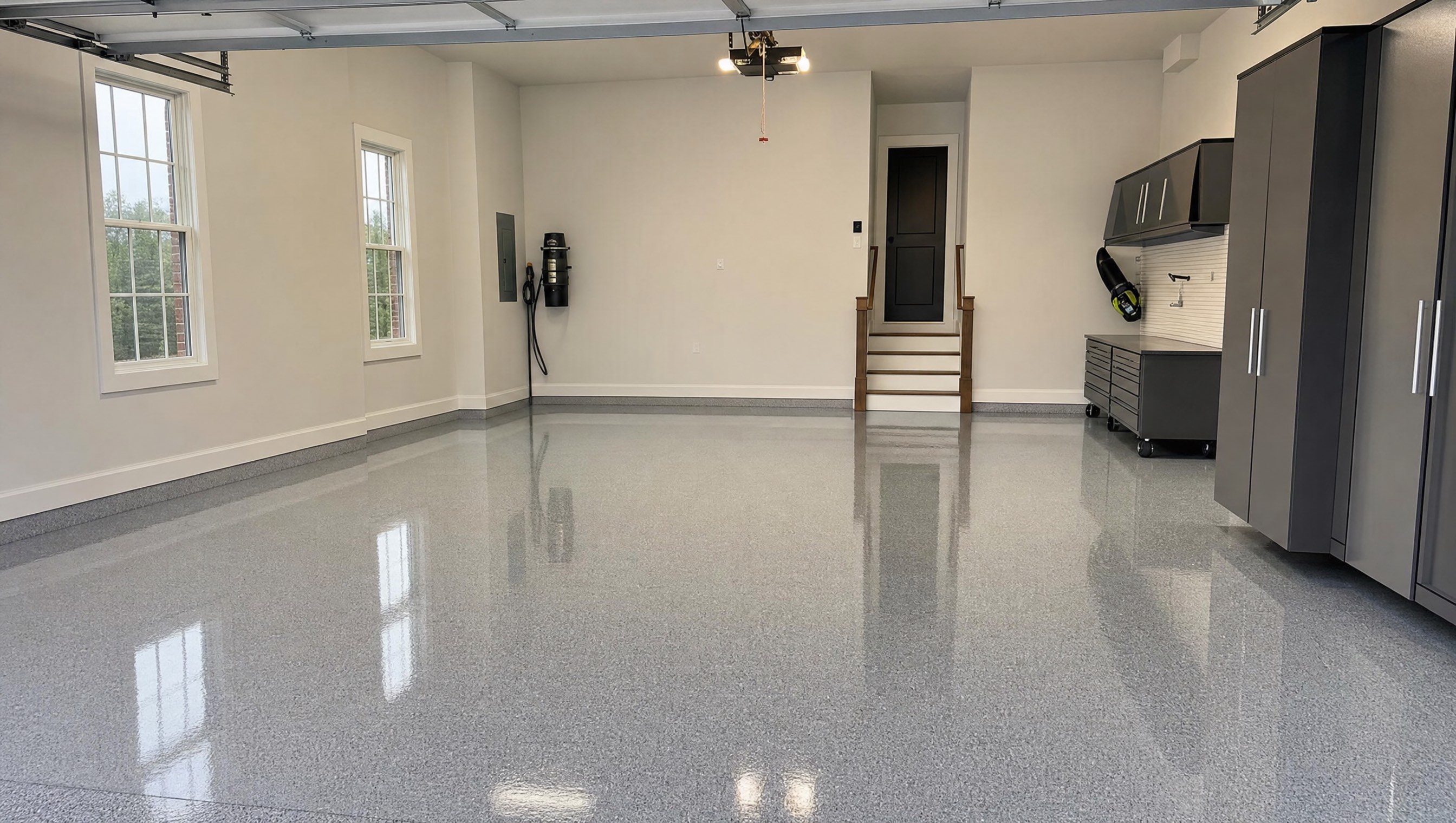
Nashville's downtown core, the Gulch, Midtown, and the medical district around Vanderbilt have seen a wave of parking structure construction over the past decade to keep pace with growth. Parking garage floors - whether a ground-level slab-on-grade deck or an elevated structural deck ten stories up - require a different coating specification than any other commercial application. Standard epoxy is the wrong material for most parking deck surfaces. This guide covers what Nashville parking garage owners and property managers actually specify.
Why Standard Epoxy Is Often the Wrong Choice for Parking Decks
Ground-level parking slabs on grade can use standard epoxy flooring Nashville systems similar to warehouse applications. Elevated parking decks are a different problem entirely, and standard epoxy fails on them for specific structural reasons:
- Deck movement and deflection - elevated concrete decks flex under vehicle loads and thermal expansion; rigid epoxy coatings crack and delaminate where standard epoxy cannot accommodate that movement
- Waterproofing requirement - elevated decks protect structural steel and rebar below from water intrusion, deicing salt, and chloride penetration; epoxy alone does not waterproof, it only coats the surface
- UV exposure - open-air and partially open parking decks receive full sun exposure that yellows and degrades standard aromatic epoxy within 1–2 years
- Freeze-thaw cycling - Nashville's winter freeze-thaw cycles push water into any coating cracks, and repeated freezing expands cracks and accelerates deck coating failure
The correct specification for elevated Nashville parking decks is a traffic-rated polyurethane or polyurea deck coating system - not epoxy. These systems flex with deck movement, provide true waterproofing membrane protection, and resist UV degradation far better than standard epoxy.
Nashville Parking Structure Types and Coating Specifications
Traffic Paint, Striping and ADA Compliance
Once the base deck coating cures, Nashville parking garages require striping for lane markings, parking stall boundaries, directional arrows, and fire lanes. This work must follow specific standards:
- ADA-compliant accessible stalls - Nashville Metro code requires a minimum number of van-accessible and standard accessible stalls based on total stall count, marked with the International Symbol of Accessibility and blue striping per ADA specifications
- Fire lane striping - red striping with "FIRE LANE - NO PARKING" lettering is required per Nashville Fire Marshal code along designated emergency access routes
- Directional arrows and wayfinding - one-way drive aisles require directional arrows painted at regular intervals, particularly at ramp transitions and blind corners
- Stall striping compatibility - striping paint must be chemically compatible with the deck coating system beneath it; incompatible paint chemistry causes adhesion failure and premature striping wear
Striping tip: Fast-dry traffic paint or polyurea striping compounds allow garage areas to reopen to traffic within hours rather than the 24+ hour cure time of standard traffic paint - a significant factor for parking structures that cannot close entire levels for extended periods.
Nashville Parking Deck Coating Systems Compared
| Deck Type | Base System | Waterproofing | Key Spec |
|---|---|---|---|
| Slab on grade | 100% solids epoxy | Not required | Quartz broadcast, polyaspartic top |
| Elevated deck | Fluid-applied polyurethane | Full membrane system | Flexible, UV stable, waterproof |
| Ramps | Polyurea or polyurethane | Included in membrane | Enhanced slip resistance |
| Below-grade deck | 100% solids epoxy | Not required (no weather exposure) | Chemical and abrasion resistance |
Maintenance and Recoating Cycles for Nashville Parking Decks
Nashville's winter road salt use and freeze-thaw cycling accelerate wear on parking deck coatings compared to warmer climates. Property managers should plan for:
- Annual inspection - checking for coating cracks, ponding water, and wear at high-traffic transition points before winter deicing season
- Recoat cycle of 7–12 years for a properly installed waterproof membrane system on elevated Nashville decks, versus 4–6 years for standard epoxy misapplied to a deck that needed a membrane system
- Joint and expansion sealant maintenance - expansion joints in parking structures require sealant inspection and replacement on a shorter cycle than the coating itself, typically every 3–5 years
Parking Garage Epoxy Coating Cost in Nashville
| Application | System | Cost per Sq Ft |
|---|---|---|
| Ground-level / below-grade slab | 100% solids epoxy + broadcast | $8–15 |
| Elevated deck | Waterproof polyurethane membrane | $12–22 |
| Ramps & drive aisles | Textured polyurea system | $14–24 |
| Traffic striping / ADA marking | Fast-dry compatible paint | $0.50–1.50/linear ft |