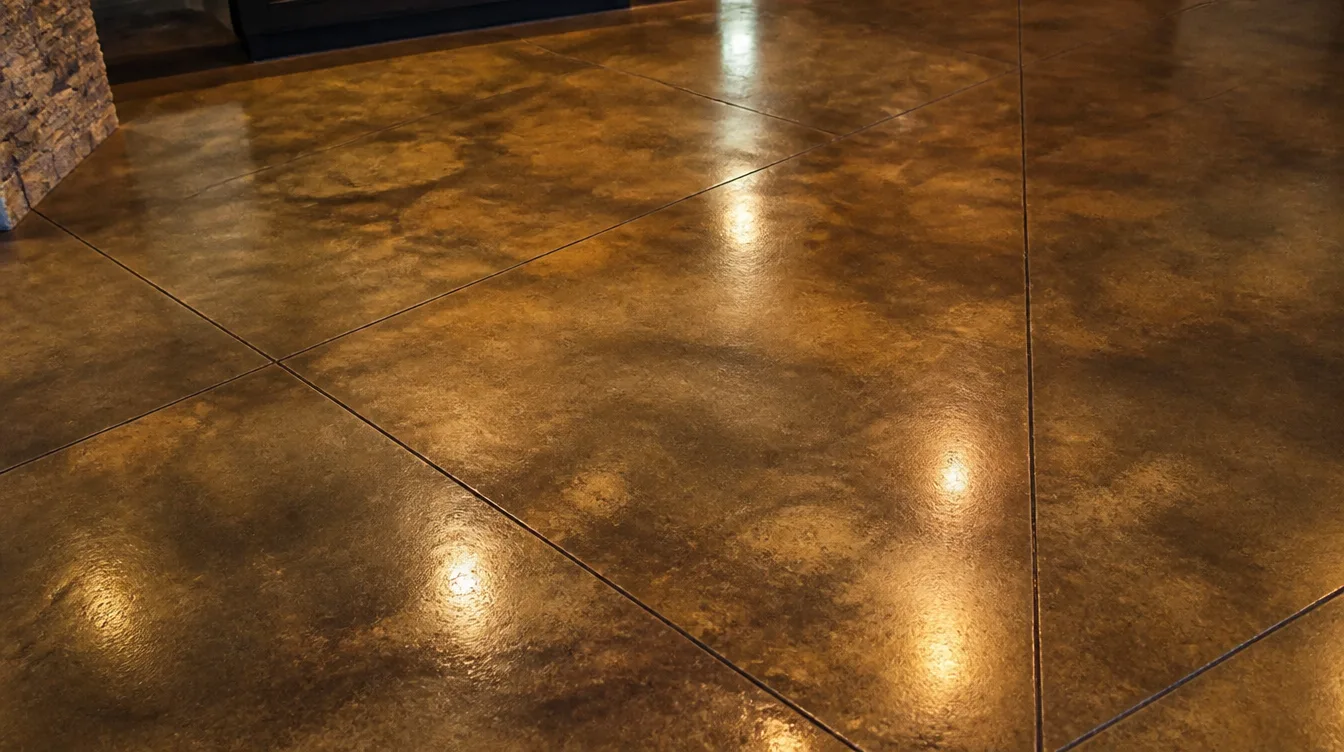
Polished concrete stains and dyes give Nashville homeowners and businesses a way to add real color and pattern to a floor that might otherwise read as plain gray, without giving up the durability and low maintenance that makes polished concrete so appealing in the first place. Whether you want the mottled, earth-tone look of an acid stain or the broader color palette of a water-based dye, both options integrate directly into the concrete rather than sitting on top of it as a separate coating.
Understanding the real differences between these two approaches — plus how decorative saw-cut patterns can add another layer of design interest — helps you make a confident choice before committing to a project, whether it's a downtown Nashville loft or a suburban retail space.
Acid Stain vs Water-Based Dye for Nashville Concrete
Acid stain works through an actual chemical reaction with the minerals in the concrete, creating a mottled, translucent, marbled effect that varies naturally from spot to spot — no two acid-stained floors look exactly alike, which is part of the appeal for homeowners wanting a genuinely unique, organic look. Because of the chemistry involved, acid stain colors are limited to earth tones: browns, tans, terracottas, and similar natural hues.
Water-based dye, by contrast, doesn't rely on a chemical reaction — it's absorbed directly into the concrete's pores, offering a much broader color range including blues, greens, grays, and other bold colors that acid stain simply can't achieve. Dye also produces more uniform, consistent coverage compared to acid stain's naturally variegated look, which matters if you're going for a clean, modern aesthetic rather than a rustic, organic one.
| Factor | Acid Stain | Water-Based Dye |
|---|---|---|
| Color range | Earth tones only | Broad range including bold colors |
| Coverage pattern | Mottled, variegated | Uniform, consistent |
| Mechanism | Chemical reaction | Absorption into pores |
| Best for | Organic, rustic aesthetic | Clean, modern, bold aesthetic |
Color Options and Application Process
Both stain and dye are typically applied partway through the grinding and polishing sequence — after the initial grinding steps expose and open the concrete surface, but before the finer polishing passes that build final gloss. This timing allows the color to fully penetrate before the surface is sealed and polished to its final sheen.
- Surface prep: initial diamond grinding to open the concrete's pores for stain or dye absorption
- Application: stain or dye applied by sprayer, roller, or sponge depending on the desired effect and coverage pattern
- Neutralization (acid stain only): a neutralizing rinse stops the chemical reaction at the desired color depth
- Continued polishing: grinding resumes through progressively finer steps to reach the target gloss level
Multiple colors can even be layered or blended during application for a more custom, one-of-a-kind result, though this adds complexity and cost compared to a single-color application.
Decorative Saw-Cut Patterns
Beyond color, decorative saw-cut patterns add a geometric design layer that many Nashville homeowners and business owners don't realize is possible with polished concrete. Shallow cuts made into the surface before staining create defined lines and shapes — a tile-look grid pattern, a border around the room's perimeter, or entirely custom geometric designs.
A popular combination: Saw-cut grid patterns combined with a two-tone stain or dye application — alternating colors between "tiles" — can create a striking custom floor design that reads as significantly more expensive than the actual cost difference over a standard single-color polish.
Saw-cut patterns work especially well in larger commercial or retail spaces where a plain expanse of polished concrete might otherwise feel visually flat, breaking up the floor into defined zones or adding directional interest that guides the eye through the space.
Combining Stain With Polished Finish
The real appeal of stained or dyed polished concrete is that you're not choosing between color and shine — both stain and dye become part of the concrete itself, allowing the polishing process to continue afterward to whatever gloss level you want, from a satin finish to a full high-gloss mirror shine. For a deeper look at how gloss level itself affects the final appearance, see our guide to polished concrete shine levels explained for Nashville properties.
Because stain and dye become part of the concrete's surface rather than a separate topical layer, the color holds up for the same 15-20+ year lifespan as the underlying polished concrete itself, without the risk of a coating wearing through and exposing bare concrete underneath — a real advantage over painted or coated concrete alternatives that can chip or wear unevenly over time.
See our concrete polishing Nashville page for our full grinding, staining, and polishing process, and our stained concrete floors Nashville page for more on color and pattern options specifically. For budgeting purposes, our polished concrete cost breakdown covers how decorative stain and saw-cut work factors into overall project pricing.
Where Stained Polished Concrete Works Best in Nashville
Certain project types tend to get the most visual and practical value out of stain and dye options. Adaptive reuse projects converting old warehouses and industrial buildings into lofts or offices — common across areas like Marathon Village and Wedgewood-Houston — often use acid stain's earth-tone, organic look to complement the existing exposed brick and steel character of the building rather than fighting against it with a stark, uniform gray floor.
Retail and hospitality spaces, on the other hand, tend to favor water-based dye's bolder color range and more uniform coverage, since these spaces often want a specific brand color or a clean, modern look that a naturally variegated acid stain wouldn't deliver as reliably. Residential applications split fairly evenly between the two depending on personal taste — a rustic, warm basement or living space might lean acid stain, while a sleek, contemporary kitchen or living area might lean dye.
Maintaining a Stained Polished Concrete Floor
Maintenance for stained and dyed polished concrete follows the same simple routine as standard polished concrete — regular dust mopping and occasional damp mopping with a neutral pH cleaner. Because the color is integrated into the concrete rather than sitting on top as a coating, there's no wax or sealant to maintain, and no risk of the color wearing away separately from the underlying floor.
The one consideration specific to stained floors is that acidic spills — wine, citrus juice, vinegar — can still etch the polished surface the same way they would on an unstained floor, potentially creating a visible light spot against the surrounding stained color. Prompt cleanup of acidic spills remains just as important on a stained floor as on a standard gray polished floor, if not slightly more visually noticeable given the color contrast an etch mark can create.
With reasonable care, a stained and polished concrete floor holds its color and shine for the same 15-20+ year lifespan as any other polished concrete installation, making the decorative upgrade a one-time design decision rather than an ongoing maintenance commitment.
Periodic burnishing, the same light re-polishing pass recommended for standard polished concrete every one to three years depending on traffic, works equally well on stained floors and helps maintain peak reflectivity without disturbing the underlying color. This is a far simpler maintenance ask than the periodic wax stripping and reapplication that coated or sealed decorative concrete finishes typically require, which is part of why stained polished concrete has become the preferred decorative flooring option for Nashville homeowners and businesses who want real color without taking on a heavier ongoing maintenance burden.