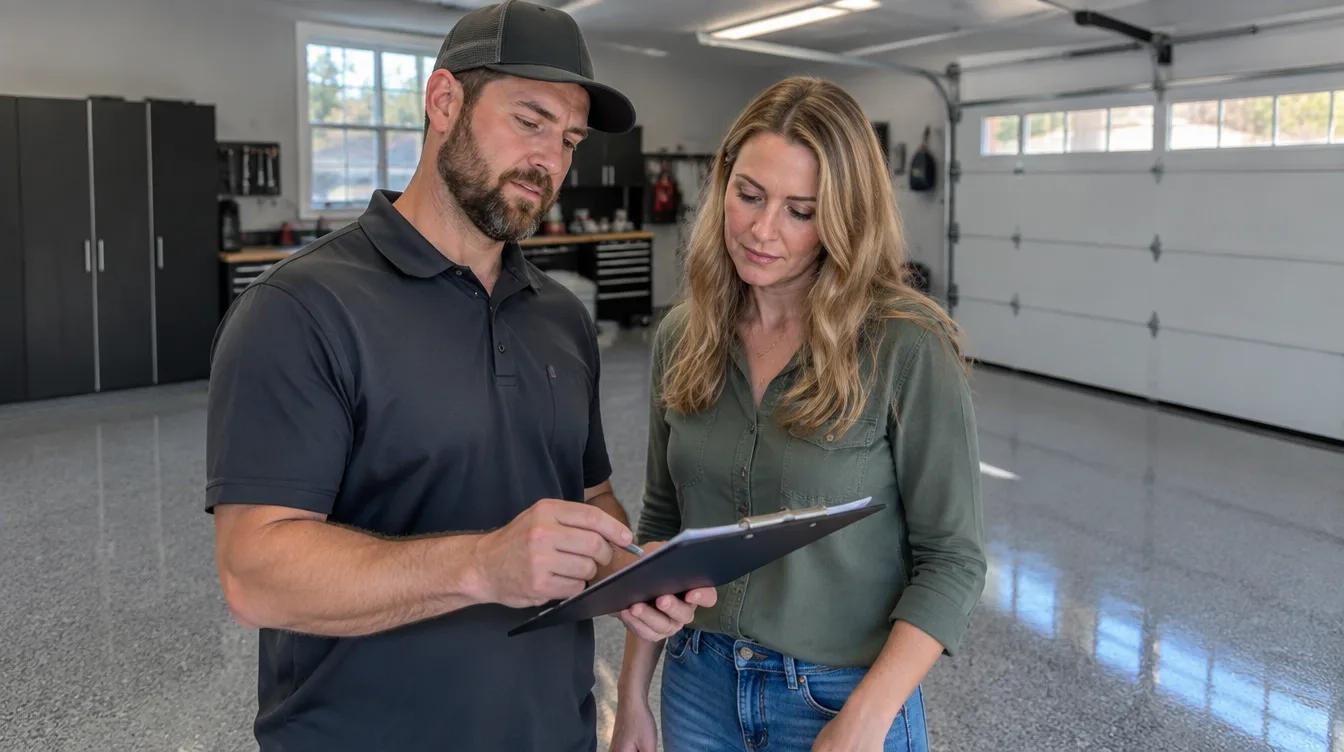
An epoxy flooring checklist before signing a Nashville contract can save homeowners from a disappointing, short-lived floor and from contract disputes down the road. Because epoxy flooring quality varies enormously between contractors — largely due to differences in surface prep, material specification, and honesty around warranty terms — knowing exactly what to confirm before signing puts you in a far stronger position than simply comparing bottom-line prices.
This checklist walks through the specific questions and confirmations that separate a contract you can trust from one that leaves too much room for corners to be cut after you've already signed.
Why a Checklist Protects Nashville Homeowners
Epoxy flooring failures are almost always traceable to one of a small handful of root causes: inadequate surface prep, undersized material specification, or a contractor who simply doesn't stand behind the work. A written checklist confirmed before signing forces these details into the open early, when you still have leverage to walk away or negotiate, rather than discovering a shortcut was taken only after the floor starts peeling or delaminating months later.
Because a poorly installed epoxy floor typically has to be completely ground out and reinstalled rather than simply patched, the cost of getting it wrong the first time is far higher than the modest extra diligence of confirming these details up front.
Surface Prep and Material Specification Questions
The two most consequential technical decisions in any epoxy installation are how the surface is prepared and what material is actually applied — and both are worth confirming in writing before signing.
- Is diamond grinding included, not acid etching? Diamond grinding mechanically opens the concrete's pores for proper adhesion, while acid etching is a cheaper chemical shortcut that produces a far weaker bond and is the single most common cause of early epoxy failure.
- Is the material specified as 100% solids epoxy? Ask for this in writing rather than a generic reference to "epoxy coating" — solids content directly determines coating thickness and durability, and lower-solids water-based products are cheaper but far less durable.
- How many coats, and what's the total system thickness? A single thin coat wears through quickly under vehicle traffic; a proper system typically includes a base coat, flake or quartz broadcast, and one or more topcoats.
- Will cracks and existing damage be repaired before coating? Confirm crack repair is included in the base price rather than treated as a surprise add-on discovered mid-project.
Red flag: if a contractor won't specify diamond grinding and 100% solids material in writing, or seems evasive when asked directly, treat that as a serious warning sign rather than a minor omission. Our full epoxy flooring Nashville page details the exact prep and material standards we use on every job, which is a useful benchmark for evaluating any contractor's proposal.
Warranty and Company Stability Questions
A warranty is only as good as the company standing behind it, which makes both the warranty terms themselves and the contractor's business stability worth confirming before signing anything.
- Is there a written warranty covering both materials and workmanship? Get the specific duration for each in writing, not a verbal assurance.
- How long has the company been in business under its current name? A contractor with a short or unclear operating history may not be around to honor a multi-year warranty.
- What specifically voids the warranty? Understand any exclusions — heavy equipment, certain chemicals, or improper maintenance — before you're surprised by a denied claim.
Our epoxy floor warranty red flags guide goes deeper into the specific warranty language patterns that should give a homeowner pause, including vague duration terms and warranties that exclude nearly everything that could realistically go wrong.
Timeline and Scheduling Questions
Epoxy installation timelines are fairly predictable when done correctly, which makes a proposed schedule a useful gut-check on whether a contractor is planning to do the job right.
| Project Phase | Typical Duration |
|---|---|
| Surface prep (grinding, crack repair) | Half day to full day |
| Base coat and flake broadcast | Same day as prep or following day |
| Topcoat application | Following day |
| Cure before light foot traffic | 12-24 hours |
| Cure before vehicle traffic | 3-5 days (standard epoxy) |
A standard two-car garage installation typically takes about two days of on-site work, with the full cure schedule extending several days beyond that before the garage is ready for normal vehicle use. A contractor who promises same-day full completion with no cure period, or who can't give a clear day-by-day breakdown when asked, may be planning to skip steps that a homeowner won't notice until the floor starts failing.
Questions to Ask Before Signing
Beyond the specific technical items above, a short list of direct questions during the quoting conversation helps confirm you're dealing with a contractor who takes the process seriously. Our full 10 questions to ask a Nashville epoxy contractor guide covers this in more depth, but the essentials include asking for references from recent local jobs, confirming insurance and licensing, and getting the full scope of work — not just a price — in writing before signing anything.
Taking an extra day or two to confirm these details before signing costs nothing and can be the difference between a floor that looks great for a decade and one that needs to be redone within a year or two. Get a Nashville quote with no surprises from our team — we'll walk through every item on this checklist as part of a standard estimate, not as an afterthought.
Comparing Multiple Nashville Bids Fairly
When comparing quotes from several contractors, resist the temptation to simply pick the lowest number without checking whether each bid covers the same scope of work. A quote that's significantly lower than the others often means a missing line item — no crack repair, acid etch instead of diamond grinding, a thinner coating system, or a shorter warranty — rather than a genuinely better deal.
Requesting a written, itemized quote from every contractor you're considering — rather than accepting a single lump-sum number — makes this comparison possible. If a contractor resists providing that level of detail, or gives noticeably different answers when asked the same checklist questions on different calls, treat that inconsistency as useful information about how the actual installation is likely to go.
Local Nashville Considerations Worth Confirming
Nashville's climate brings genuine humidity swings between seasons, which makes moisture testing before installation a legitimate line item to ask about, particularly for basement or slab-on-grade installations where a concrete moisture vapor emission test can catch a problem before it becomes a coating failure. A contractor familiar with Middle Tennessee conditions should be able to speak to this specifically rather than treating it as an unusual request.
It's also worth confirming whether the contractor is a local, established Nashville business versus a traveling crew working the region temporarily. Local presence matters for warranty follow-through — a company with a permanent local office and a multi-year track record in the Nashville market is generally in a stronger position to honor a warranty claim years down the road than an out-of-town crew that may not still be operating in the area when an issue arises. Simply asking how long the crew has worked together and whether the company carries a physical Nashville-area address, rather than just a mailing address or PO box, can reveal a great deal about long-term accountability before you ever sign a contract.