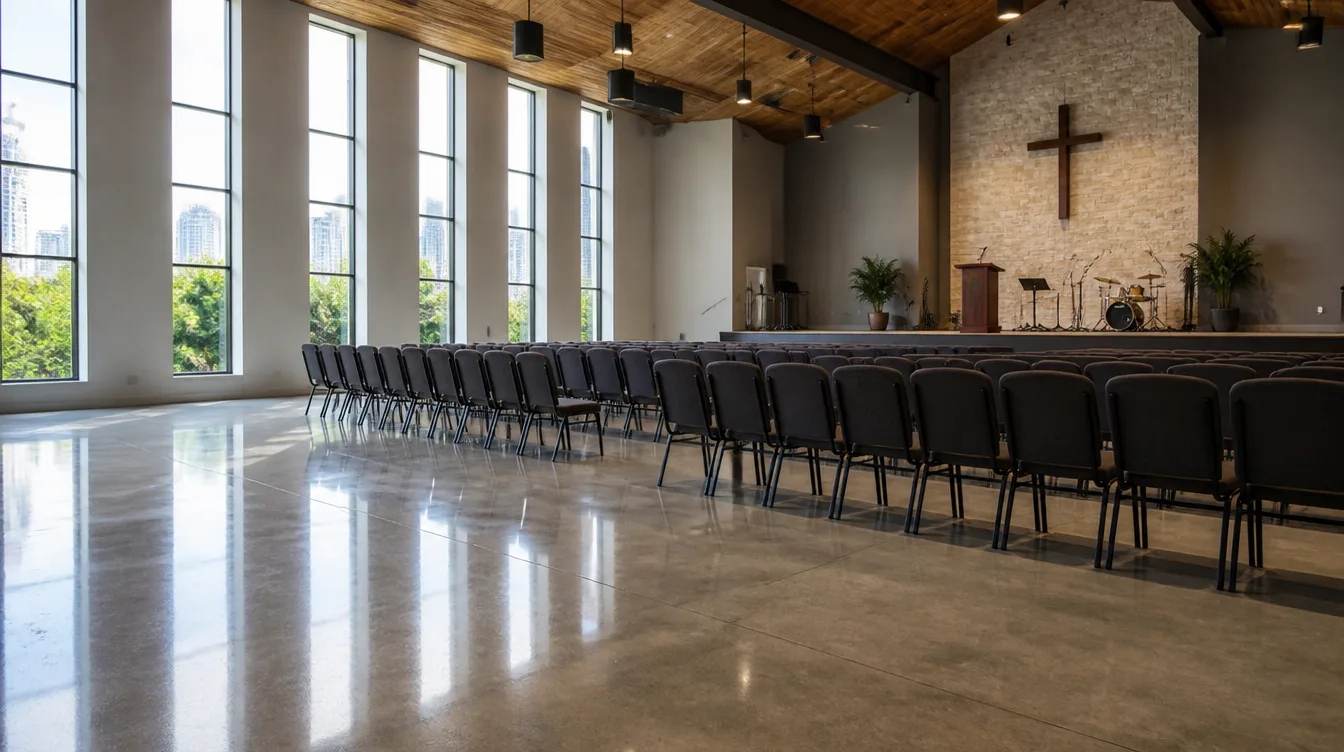
Polished concrete for Nashville churches and worship spaces has moved from an occasional design choice to a mainstream specification, as more congregations plan new construction or renovate existing facilities with a contemporary, minimalist aesthetic in mind. Beyond the visual appeal, polished concrete delivers durability, acoustic properties, and long-term value that make genuine practical sense for a building type that sees intense weekly use.
Whether you're planning a new sanctuary in a growing congregation near Mt. Juliet or renovating a decades-old fellowship hall in an established Nashville church, understanding how polished concrete actually performs in a worship context — not just how it looks — helps facilities committees make a confident, informed decision.
Why Polished Concrete Fits Nashville Worship Spaces
Modern church architecture across Nashville has increasingly embraced a cleaner, more minimalist design language — exposed structural elements, abundant natural light, and simplified material palettes that let architecture and light do the visual work rather than heavy ornamentation. Polished concrete fits naturally into this aesthetic, offering a sleek, reflective surface that reads as intentional and contemporary rather than utilitarian.
Beyond aesthetics, polished concrete's extreme durability suits a building type that hosts services, events, and community gatherings essentially every week of the year without pause for renovation downtime. A properly installed polished concrete floor requires no periodic refinishing or coating renewal, standing up to decades of congregational traffic with routine maintenance alone.
Acoustic Considerations in Sanctuaries
Flooring material has a real, measurable effect on room acoustics, and polished concrete's hard, reflective surface behaves very differently from carpet in this respect. Carpet absorbs and dampens sound, while polished concrete reflects it — increasing reverberation time in a room, which can be either a benefit or a challenge depending entirely on how the rest of the sanctuary's acoustic environment and sound system are designed.
Work with your sound team early: Churches planning a switch from carpet to polished concrete should involve their audio/sound engineer or acoustic consultant in the flooring decision, since the change in reverberation may require adjustments to speaker placement, acoustic panels, or sound system tuning to maintain clear speech intelligibility during services.
Some worship styles and musical traditions actually benefit from the added reverberation polished concrete introduces — choral or organ-centered worship can gain a richer, more resonant quality, while highly amplified contemporary worship setups may need additional acoustic treatment elsewhere in the room to manage the same reflectivity. For churches also evaluating acoustic performance in a performance or music-adjacent context, our guide to Nashville music venue acoustics and flooring covers similar considerations from a live-performance angle.
Durability for Fellowship Hall Multi-Use
Fellowship halls see an entirely different kind of use than a sanctuary — folding tables and chairs set up and broken down weekly, community meals, youth activities, and event rentals all putting real wear on the floor. Polished concrete handles this variety exceptionally well, resisting scuffs from furniture legs and cleaning up quickly after events without the staining risk carpet carries.
| Flooring Type | Fellowship Hall Durability | Typical Lifespan |
|---|---|---|
| Carpet | Moderate — stains and wears with heavy use | 5-10 years |
| Tile | Good — grout lines need maintenance | 10-15 years |
| Polished Concrete | Excellent | 15-20+ years |
This durability profile matters especially for churches running an active community outreach program with frequent outside rentals or events, where a wider range of unpredictable use puts more stress on flooring than a purely internal congregational schedule would.
Budget-Friendly Phased Polishing
Church capital budgets typically operate on multi-year cycles or capital campaign timelines, making phased polished concrete installation a practical way to spread cost across manageable budget periods rather than committing to a full-building renovation at once. Many congregations start with the fellowship hall or main lobby — high-visibility, high-traffic spaces — before extending the same treatment to the sanctuary in a subsequent phase.
Congregations exploring commercial epoxy alternatives for higher-traffic areas like kitchens or gyms alongside a polished concrete sanctuary should also see our guide to commercial epoxy flooring for Nashville churches and religious facilities, since many church buildings end up using both flooring types across different areas based on each space's specific demands.
See our concrete polishing Nashville page for our full grinding and polishing process for church and institutional projects of any size.
Design Flexibility Within a Worship Aesthetic
Polished concrete offers more design range than its plain-gray reputation suggests, which matters for churches wanting to align the floor with a specific architectural vision rather than settling for a purely industrial look. Gloss level alone provides meaningful control over how the space feels — a satin finish reads as warmer and more contemplative for a sanctuary, while a higher gloss level in a lobby or fellowship hall creates a brighter, more energetic entry experience for arriving congregants.
Stain and dye options extend that flexibility further, allowing churches to introduce warm earth tones or specific accent colors that complement existing architectural elements like wood beams, stone accents, or stained glass, without departing from concrete's inherent durability and low-maintenance profile. A church renovating a historic building with existing masonry or wood detailing might lean toward an acid-stained finish that echoes those warmer, natural tones rather than a stark, cool gray polish.
A design tip for sanctuaries: Consider how natural light moves through the space at different times of day and across seasons — polished concrete's reflectivity interacts with sunlight in a way that can meaningfully change the room's atmosphere during morning versus evening services.
Maintenance for a Weekly-Use Worship Facility
Churches operate on a demanding weekly cycle — Sunday services, midweek programming, and often daily use of office and common spaces — which makes low-maintenance flooring a genuinely practical priority, not just a cost consideration. Polished concrete's routine maintenance is refreshingly simple: regular dust mopping and occasional damp mopping with a neutral pH cleaner, with no wax, sealant, or chemical refinishing required.
This matters especially for churches relying on volunteer facilities teams or limited part-time custodial staff, since a simpler maintenance routine means less specialized training and fewer products to manage compared to carpet's vacuuming and periodic deep-cleaning needs, or tile's grout maintenance. Facilities committees evaluating flooring options should factor in this ongoing labor savings alongside the upfront installation cost when comparing options for a new or renovated space.
A periodic burnishing pass, typically every one to three years depending on traffic volume, keeps the floor's shine at its peak without requiring the kind of full-scale refinishing project that carpet replacement or floor stripping and resealing would demand on a comparable timeline.
New Construction vs Renovating an Existing Slab
Churches building new have a straightforward path to polished concrete — the slab can be poured and finished specifically to support a high-quality polish from the start, without the complications that sometimes arise in older buildings. New construction also allows the polishing plan to be coordinated directly with the architectural and acoustic design from the outset, rather than retrofitted onto decisions already made.
Renovating an existing sanctuary or fellowship hall slab is still very achievable in most cases, but typically requires a more thorough evaluation first — removing existing flooring, assessing the slab's condition and moisture levels, and confirming it can achieve the surface profile needed for a quality polish. Older Nashville church buildings, some decades old, occasionally have slabs poured under different standards than modern construction, making this evaluation step worth budgeting time and cost for before committing to a renovation timeline.
Either path benefits from working with a contractor experienced in institutional and commercial-scale polished concrete specifically, since the project management, scheduling around an active congregation's calendar, and larger square footage involved differ meaningfully from a typical residential polishing job.