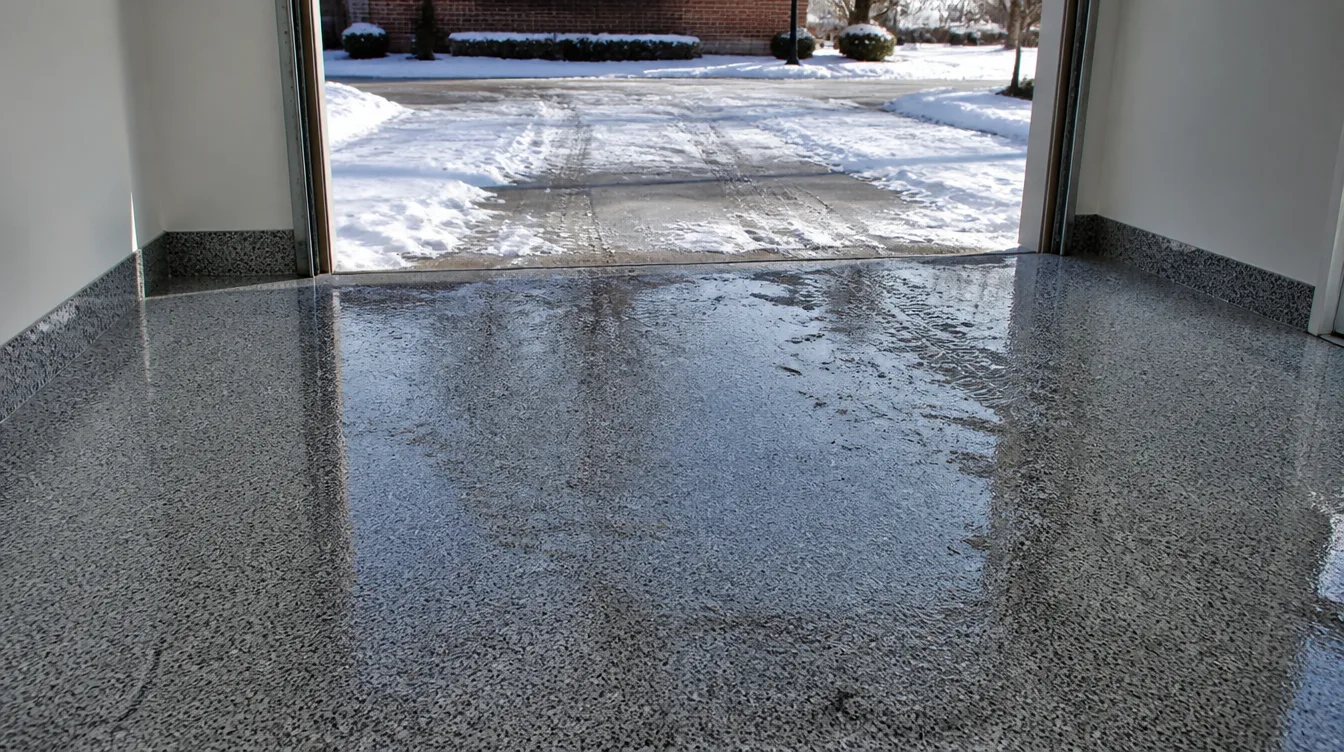
Preparing your Nashville garage floor for winter matters more than most homeowners realize, since Nashville sees real cold snaps, occasional snow and ice events, and — most damaging of all — road salt and de-icing chemicals tracked in on tires and boots throughout the season. Bare concrete handles this combination poorly, but a coated floor can shrug off the entire season with minimal effort.
Here's what actually happens to an unprotected garage floor during a Nashville winter, and the specific steps that protect a floor through the season, whether it's already coated or you're deciding whether to coat it before the cold weather arrives.
Winter Challenges for Nashville Garage Floors
Nashville winters bring a specific combination of threats to an unprotected garage floor. Freeze-thaw cycling — where moisture absorbed into the concrete repeatedly freezes and expands, then thaws — is one of the most damaging processes a bare slab experiences, gradually causing surface spalling and cracking over repeated seasons. Road salt and de-icing chemicals compound this problem significantly, since chloride ions penetrate porous bare concrete and accelerate the same freeze-thaw damage while also contributing their own corrosive effects.
On top of the chemical and freeze-thaw threats, winter simply means more moisture, slush, and grime getting tracked directly into the garage on tires and boots throughout the season, which bare concrete absorbs and stains more readily than a sealed, coated surface.
How Epoxy Protects Against Road Salt and De-Icing Chemicals
An epoxy coating creates a continuous, non-porous barrier across the concrete surface, which means road salt and de-icing chemicals simply sit on top of the coating rather than soaking into the slab itself. Since chloride penetration is the primary driver of salt-related concrete damage, sealing the surface effectively eliminates that damage pathway entirely.
| Condition | Bare Concrete | Epoxy-Coated Floor |
|---|---|---|
| Salt/chloride absorption | Penetrates porous surface | Sealed out by coating |
| Freeze-thaw spalling risk | High over time | Significantly reduced |
| Staining from tracked-in slush | Absorbs and stains | Wipes clean off sealed surface |
Our Nashville freeze-thaw concrete protection guide goes deeper into exactly how this damage mechanism works and why sealing the surface is the most effective preventive measure available, beyond just winter-specific concerns.
Managing Moisture and Slush Tracked Indoors
Beyond the chemical protection an epoxy coating provides, its smooth, sealed surface also makes day-to-day winter moisture management far easier. Tracked-in slush and wet residue simply sit on top of a coated floor rather than soaking in, which means a quick sweep or squeegee removes most of what would otherwise stain bare concrete permanently.
For garages that see regular wet-tire traffic through the winter months, specifying an anti-slip additive in the topcoat is worth discussing with your installer. A textured, slip-resistant finish provides meaningfully better traction on a floor that's regularly wet from melting snow and slush, without sacrificing the coating's protective qualities or overall appearance.
Winter Cleaning Tips for Nashville Garages
A few simple habits keep any epoxy-coated Nashville garage floor performing well through the season. Regularly sweeping or rinsing away accumulated salt residue and slush — ideally every week or two during active winter weather — prevents chloride buildup on the coating's surface and keeps the floor looking its best, even though the coating itself is doing the heavy lifting in terms of actual protection.
- Sweep or rinse regularly: remove tracked-in salt residue and slush every week or two during active winter weather.
- Use a mild cleaner, not harsh chemicals: a pH-neutral floor cleaner protects the topcoat's finish better than harsh degreasers or acidic cleaners over repeated winter use.
- Address standing puddles promptly: while a sealed epoxy floor handles standing moisture far better than bare concrete, wiping up puddles reduces slip risk and keeps the floor looking fresh.
- Inspect for wear at high-traffic entry points: the area just inside a garage door sees the most concentrated moisture and salt exposure; a quick seasonal check catches any early wear before it becomes a bigger issue.
For homeowners whose garage floor is still bare concrete heading into winter, our epoxy garage floor Nashville team can often still schedule an installation before the coldest weather arrives, depending on current scheduling — earlier in the fall is ideal, but reach out to check current availability regardless of the season. Get your Nashville garage floor ready for winter and we'll help you decide whether a coating before the season starts, or a maintenance check on an existing coated floor, makes the most sense for your situation.
A Pre-Winter Checklist for Nashville Garage Owners
Whether a garage floor is already coated or still bare concrete, a short pre-winter check helps avoid surprises once cold weather and road salt season actually arrive. For an existing epoxy floor, inspect the coating for any chips, worn spots, or areas where the topcoat has thinned from years of use — these are the spots most vulnerable to moisture and chloride penetration once winter conditions start, and touching them up before the season begins is far easier than addressing damage mid-winter.
- Inspect existing coating for wear: chips or thin spots near the garage door and high-traffic paths are the most common failure points.
- Clear gutters and check for water intrusion: water pooling near the garage foundation can find its way indoors during heavy winter rain or snowmelt, undermining even a well-coated floor's protection.
- Stock winter-safe cleaning supplies: having a pH-neutral cleaner and a squeegee on hand before the first snow makes ongoing maintenance far more convenient than scrambling once slush season starts.
- Schedule coating work early if needed: if the floor is still bare concrete or the existing coating is significantly worn, scheduling installation or recoating before the coldest weather arrives avoids installation-condition complications later in the season.
Nashville homeowners in neighborhoods that see heavier winter weather exposure — properties at higher elevation around areas like Brentwood and Franklin, for example, sometimes see slightly more accumulated snow and ice than the immediate downtown core — may want to prioritize this checklist earlier in the fall than homeowners in milder microclimates closer to the city center. Getting ahead of this seasonal prep, rather than reacting once the first cold snap hits, makes the entire winter far less stressful for the floor and for the homeowner maintaining it.
Why Epoxy Outperforms Other Winter Floor Strategies
Some homeowners consider alternative winter floor protection strategies instead of a permanent coating — floor mats, temporary sealers, or simply accepting the wear as a cost of Nashville winters. Each of these falls short of what a proper epoxy system delivers. Floor mats only protect the specific area they cover, leaving the rest of the slab exposed to the same salt and moisture damage, and they trap moisture underneath themselves in ways that can actually worsen localized staining.
Temporary concrete sealers offer some protection but typically need reapplication every year or two and provide meaningfully less chemical and abrasion resistance than a true epoxy or polyaspartic coating system. Simply accepting the wear as unavoidable is the costliest approach long-term, since the cumulative freeze-thaw and chloride damage compounds year over year, eventually requiring far more expensive concrete repair or replacement than a one-time coating investment would have cost.
The practical takeaway: a properly installed epoxy or polyaspartic coating remains the single most effective, lowest-maintenance strategy for protecting a Nashville garage floor through winter, outperforming mats, temporary sealers, and the do-nothing approach on every meaningful dimension — protection, maintenance effort, and long-term cost.